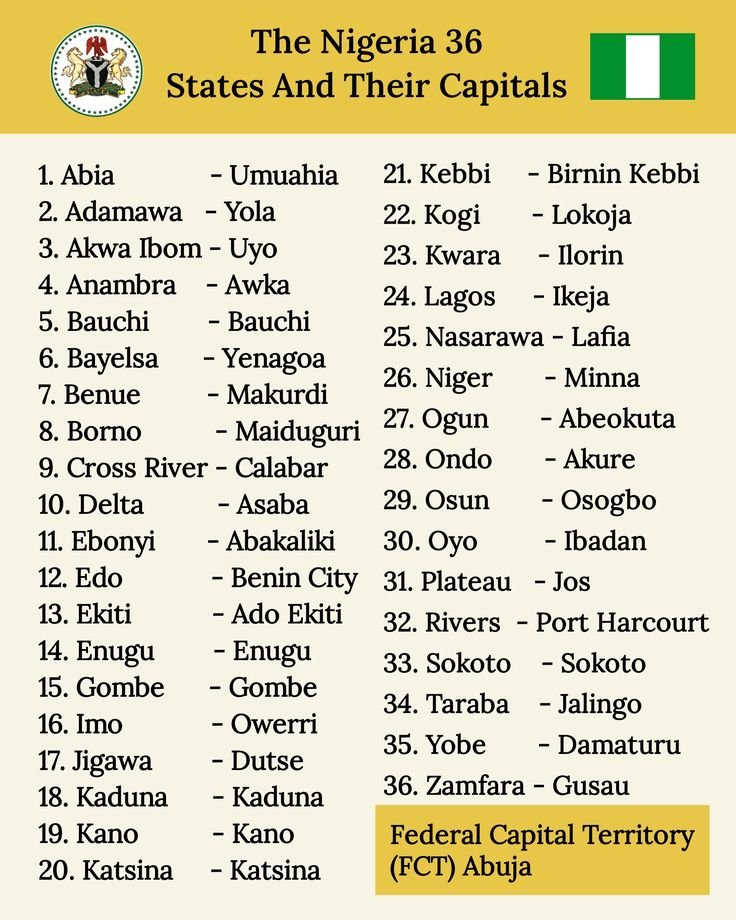
Nigeria has 36 states and one Federal Capital Territory, Abuja, serving as the country’s capital. Each state boasts its own unique charm and offerings, making Nigeria a diverse tapestry of culture, history, and natural beauty. From the bustling streets of Lagos to the tranquil waters of Calabar, the Nigeria state and capital pairing provides a fascinating insight into the nation’s rich heritage and promising future. Let’s embark on a journey through Nigeria’s vibrant states and capitals, unraveling the tales they have to tell.

Nigeria State and Capital: Discover the Vibrant Diversity of Nigeria
Welcome to a fascinating journey through the colorful tapestry of Nigeria, a country renowned for its rich cultural heritage, diverse landscapes, and bustling cities. In this blog post, we will delve into the captivating world of Nigeria’s states and capitals, each with its unique charm and significance. Join us as we explore the beauty, history, and vibrancy of Nigeria state by state.
The Federal Capital Territory: Abuja
Our journey begins in the heart of Nigeria, the Federal Capital Territory of Abuja. As the capital city of Nigeria, Abuja is a bustling metropolis that serves as the political and administrative center of the country. Designed by renowned architects, Abuja is known for its modern architecture, wide boulevards, and lush greenery. Visitors to Abuja can explore iconic landmarks such as the Aso Rock, the Nigerian Presidential Complex, and the National Mosque.
Lagos State: Lagos
Moving on to Lagos State, we encounter the vibrant city of Lagos, known as the commercial hub of Nigeria. With its bustling markets, lively nightlife, and stunning beaches, Lagos is a city that never sleeps. Visitors can experience the energy of Lagos by visiting popular attractions like the Lekki Conservation Centre, Freedom Park, and the iconic Third Mainland Bridge. Lagos is also famous for its delicious street food, vibrant music scene, and colorful festivals.
Ogun State: Abeokuta
Next on our list is Ogun State, home to the historic city of Abeokuta. Known for its rocky landscapes and rich history, Abeokuta is a city steeped in tradition and culture. Visitors can explore the ancient Olumo Rock, a natural wonder that offers breathtaking views of the city. Ogun State is also famous for its Adire textile industry, where visitors can witness the intricate process of creating traditional Nigerian fabrics.
Kano State: Kano
Heading north, we arrive in Kano State, home to the vibrant city of Kano. Known for its colorful markets, ancient dye pits, and historic palaces, Kano is a city with a rich cultural heritage. Visitors can immerse themselves in the vibrant atmosphere of Kano by exploring sites like the Great Mosque of Kano, the Gidan Makama Museum, and the bustling Kurmi Market. Kano is also renowned for its traditional crafts, including leatherwork, pottery, and weaving.
Rivers State: Port Harcourt
Our journey continues to Rivers State, where we find the bustling city of Port Harcourt. Known as the Garden City, Port Harcourt is a vibrant metropolis nestled along the banks of the Bonny River. Visitors can explore the picturesque Port Harcourt Tourist Beach, visit the iconic Isaac Boro Park, and take a stroll along the scenic Aba River. Rivers State is also famous for its vibrant street art scene, with colorful murals adorning buildings throughout the city.
Enugu State: Enugu
Next, we visit Enugu State, home to the historic city of Enugu. Known as the Coal City, Enugu is a city with a rich industrial past and a vibrant cultural scene. Visitors can explore the fascinating Awhum Waterfall, visit the serene Nike Lake Resort, and discover the intriguing National Museum of Unity. Enugu State is also famous for its vibrant music and film industry, with many Nigerian musicians and filmmakers hailing from the city.
Kaduna State: Kaduna
Our journey takes us to Kaduna State, home to the dynamic city of Kaduna. Known for its diverse population and rich history, Kaduna is a city that blends tradition with modernity. Visitors can explore sites like the majestic Kaduna National Museum, the beautiful Gamji Park, and the historic Kajuru Castle. Kaduna State is also famous for its vibrant cultural festivals, celebrating the diverse heritage of the people of Kaduna.
Oyo State: Ibadan
Finally, we arrive in Oyo State, home to the historic city of Ibadan. Known as the ancient city of Ibadan, this city is steeped in history and tradition. Visitors can explore landmarks like the towering Mapo Hall, the vibrant Bodija Market, and the serene Agodi Gardens. Oyo State is also famous for its traditional Yoruba culture, with colorful festivals, music, and dance performances that showcase the rich heritage of the region.
As we come to the end of our journey through the states and capitals of Nigeria, we hope you have enjoyed this colorful exploration of the vibrant diversity of this remarkable country. From the bustling streets of Lagos to the ancient landscapes of Kano, Nigeria is a country that never fails to captivate and inspire. Join us again for more exciting adventures in the world of travel and discovery!
Ugo and Sim Sim – Nigeria 36 States
Frequently Asked Questions
What is the capital city of Nigeria?
The capital city of Nigeria is Abuja. It became the capital of Nigeria in 1991, replacing Lagos.
How many states are in Nigeria?
Nigeria is made up of 36 states and the Federal Capital Territory (FCT), with each state having its own capital.
Which state is the most populous in Nigeria?
Lagos State is the most populous state in Nigeria, with a vibrant population and significant economic activities.
What is the significance of Abuja as Nigeria’s capital?
Abuja was chosen as the capital of Nigeria due to its central location, which aimed to promote national unity and equal representation among the diverse regions of the country.
Final Thoughts
In conclusion, learning the Nigerian states and capitals is essential for a better understanding of the country’s geography. Familiarity with Nigeria’s state and capital names can facilitate communication and enhance cultural appreciation. Remembering Nigeria’s state and capital pairs helps build knowledge and promote a deeper connection to the diverse regions within the country. Embrace the opportunity to expand your awareness by engaging with the states and capitals of Nigeria in your daily interactions.